
Ecuador: Arauz Denounces Political Persecution on X After Prosecutors Link Him to ‘Ligados’ Case
Descripción de la publicación.
NOTICIAS
5/28/20251 min read

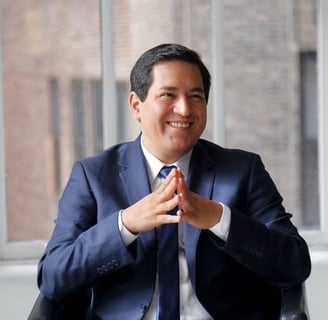
Ecuador's political climate intensified this week after the Attorney General’s Office announced criminal proceedings against Andrés Arauz and Esther Cuesta, leaders of the Citizen Revolution movement, along with Raúl González, a former Superintendent of Banks unaffiliated with the party, in connection with the “Ligados” case.
Authorities claim the three are part of an “illicit association” that sought to influence institutional appointments. Yet opposition voices say the charges are politically motivated and aim to suppress dissent ahead of the 2025 presidential race.
A tweet under fire
Posting on his X account (formerly Twitter), Andrés Arauz described the prosecution as “purely political.” He explained that the entire accusation hinges on a single tweet he wrote in solidarity with Augusto Verduga, a council member whose advisor was killed by organized crime.
“They say I wanted to seize state power because I tweeted support for someone whose colleague was murdered. What really bothers them is that I’ve exposed how the banks operate, how they tie into organized crime,” Arauz wrote.
González, unaffiliated but targeted
While Arauz and Cuesta are central to the Citizen Revolution, Raúl González has no formal ties to the movement. He was appointed Superintendent of Banks by the Citizen Participation Council in 2022 but was later removed by the Constitutional Court. His inclusion in the case has raised concerns that the judiciary is targeting not only political opponents but also independent actors who challenge elite interests.
Financial power and political silence
Arauz noted in another post that Ecuador’s last two presidents — Guillermo Lasso and Daniel Noboa — both came from banking dynasties. “They want revenge because we’re not afraid to speak out. This is about silencing those who expose corruption,” he wrote.
The use of the vague charge of “illicit association” — which does not require evidence of a concrete crime — has alarmed legal scholars and human rights advocates. Many warn that it may become a tool to criminalize political speech itself.
“They want to make political expression a crime. But we won’t be silent. Democracy cannot survive if criticism becomes illegal,” Arauz concluded on X.